
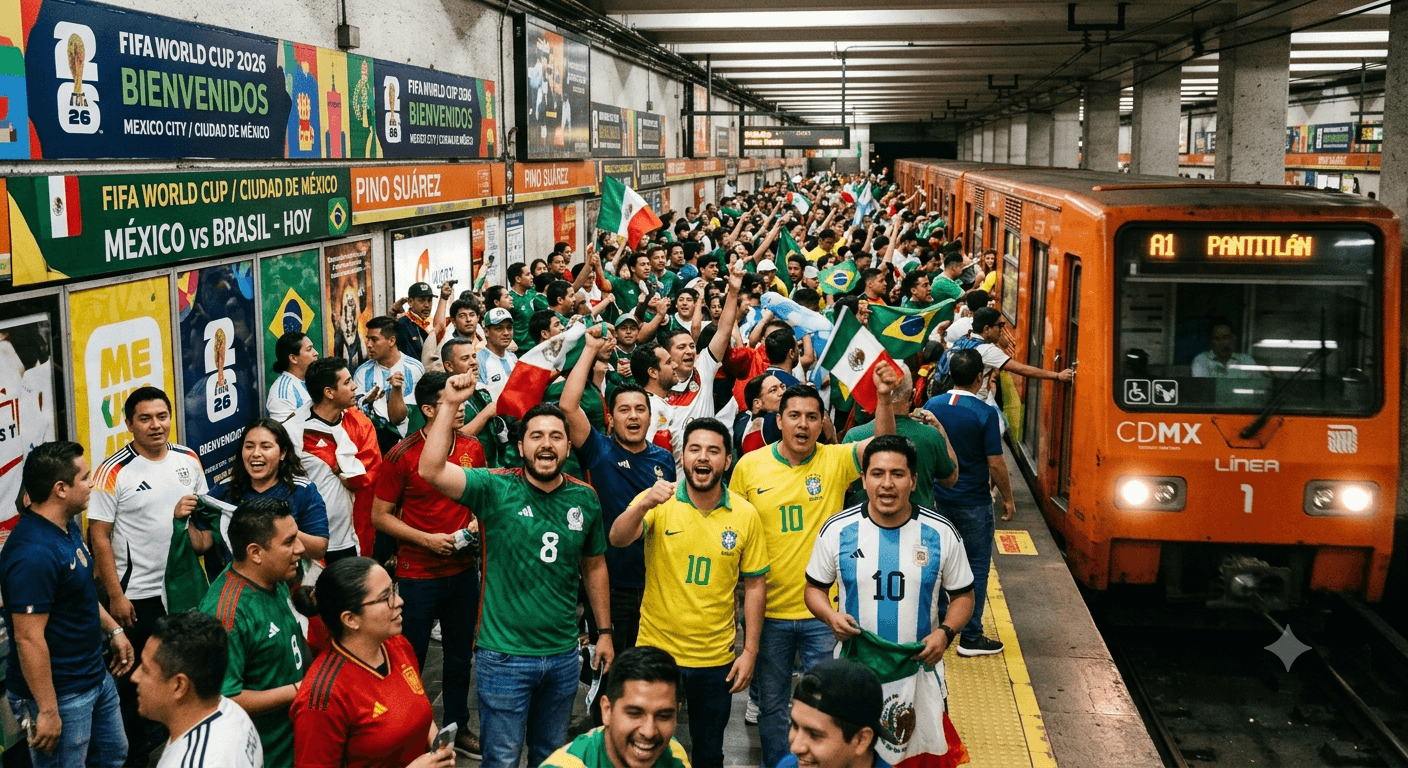
The ultimate guide to taking the metro to Estadio Azteca. Learn how to get to the stadium safely for the World Cup.
metro to Estadio Azteca
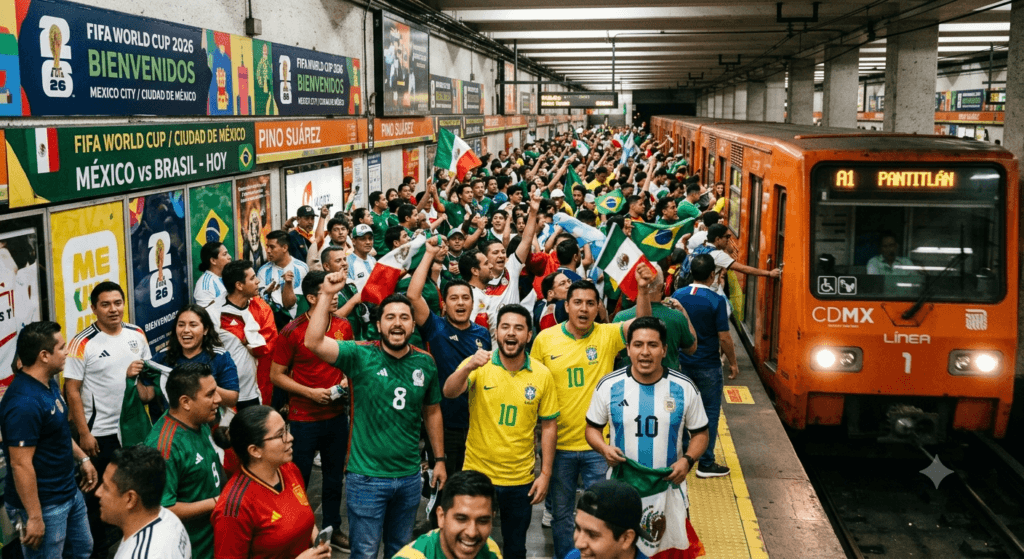
Let me paint you a picture. metro to Estadio Azteca
Why Taking the Metro to Estadio Azteca is the Best Option
metro-estadio-azteca
It’s match day. You’re staying somewhere in central Mexico City. Kickoff is in three hours. You open Google Maps, type in “Estadio Azteca,” and suddenly you’re looking at a web of colored metro lines, unfamiliar station names, and three different route options — each claiming to take between 35 and 55 minutes.
You close the app. You open Uber. You see the surge price. You close Uber.
This is the moment most World Cup fans make their first bad decision of the day.
Here’s everything you need to know before that moment arrives.
- Why the Metro Is the Right Call
- First, let’s talk about why you’re taking the metro in the first place — because some people show up to Mexico City planning to Uber everywhere and discover on match day that this was an expensive miscalculation. metro to Estadio Azteca
- On a normal day, Uber from central Mexico City to Estadio Azteca takes around 30–40 minutes and costs $7–10 USD. On a match day, with 87,000 people converging on the same area, that same journey can take 90 minutes and cost three times as much due to surge pricing.
- The metro, meanwhile, takes roughly the same time regardless of what’s happening at the stadium. It costs about 25 cents. And on World Cup match days, the service frequencyb increases to handle the crowd.
- The math is not complicated.
The Exact Route — Step by Step
metro-estadio-azteca
Estadio Azteca is not directly on the metro network, which is where most people get confused. You need two legs to get there.
Leg 1: Metro Line 2 (the Blue Line)
Line 2 runs east to west across central Mexico City and terminates at Tasqueña in the south. That’s your destination for the first part of the journey.
Depending on where you’re staying, your starting point will vary. The most common starting stations for tourists are:
• Zócalo (near the historic center and many hotels): about 12 stations to Tasqueña, roughly 22 minutes
• Insurgentes (Zona Rosa area): change at Pino Suárez, then continue to Tasqueña — about 30 minutes total
metro to Estadio Azteca
• Centro Médico (south of Reforma): 6 stations to Tasqueña, roughly 12 minutes
All of them end the same way: get off at Tasqueña. It’s the last stop on Line 2. You cannot overshoot it.
A single metro journey costs 5 pesos — about 25 US cents. Buy your ticket at any station booth or use the turnstile card if you have one loaded.
Leg 2: Tren Ligero to Estadio Azteca
At Tasqueña, follow the signs (and the crowd on match days) to the Tren Ligero — a light rail system that runs south from Tasqueña toward Xochimilco.
You want the stop called Estadio Azteca. It’s about 15 minutes from Tasqueña, direct, no changes.
The Tren Ligero runs its own ticketing system. The fare is another 5 pesos. Buy your ticket at the booth inside the station before boarding.
Total journey cost: 10 pesos, approximately 50 cents USD.
Total journey time: 40–55 minutes from central Mexico City.
Timing: The Part Most People Get Wrong
Estadio Azteca holds 87,000 people. On World Cup match days, security procedures are thorough and slow by design — this is FIFA, not a regular Liga MX match. The queues outside the stadium can take 45 to 60 minutes to clear.
Work backwards from kickoff:
If kickoff is at 6pm, you need to be through security by 5pm, which means arriving at the stadium around 4:30pm, which means leaving your hotel no later than 3:30pm.
I know that feels early. It isn’t, for a tournament of this scale.
The fans who miss the opening minutes are almost always the ones who left at a “reasonable” time based on normal circumstances. World Cup match days are not normal circumstances.
What Tasqueña Station Looks Like on Match Day
I want to prepare you for this specifically because it’s surprising the first time.
Tasqueña on a World Cup match day is an experience in itself. The station plaza outside fills with fans from dozens of countries — jerseys in every color, flags, noise, vendors selling food and scarves and flags for prices that start high and drop quickly if you wait.
Inside, the Tren Ligero platform will have a queue. It moves steadily. Platform staff will be directing people efficiently. Just follow the flow.
One practical note: hold your bag in front of you in the crowds. Not because Tasqueña is particularly dangerous, but because large, dense crowds anywhere in the world are where phones and wallets disappear. This is basic urban awareness, not paranoia.
metro to Estadio Azteca
After the Match: The Smart Strategy
Here is the single most useful piece of advice in this entire guide.
Do not rush to the metro immediately after the final whistle.
When 87,000 people try to leave a stadium at the same time, the result is a slow-moving, uncomfortable crush that takes 45 minutes to clear — and you spend that 45 minutes standing still, pressed against strangers, in the heat. metro to Estadio Azteca
Instead: stay in your seat for 10–15 minutes after the final whistle. Watch the players. Watch the atmosphere. Let the first wave leave.
Then walk slowly toward the exits. Find a food stall near the stadium and eat something — the post-match hunger is real and the queues will have shortened by the time you’ve finished.
By the time you reach the Tren Ligero back to Tasqueña, the worst of the crowd will have already passed. You’ll board in 10 minutes rather than 45.
A small adjustment that changes the end of the night completely.
metro to Estadio Azteca
If You Want to Take Uber Instead
I said earlier that Uber on match days gets expensive, and that’s true. But there’s a version of this that works if you do it right.
Before the match: Book your Uber from your hotel as early as possible — ideally 2.5 to 3 hours before kickoff. Surge pricing hasn’t peaked yet at that point.
After the match: Don’t try to hail an Uber from outside the stadium. The surge will be significant and wait times will be long. Instead, walk 10–15 minutes away from the stadium in any direction — you’ll be in a normal neighborhood — and book from there. The difference in price and wait time is significant.
The metro remains the better option overall. But if you have a specific reason to use Uber — you’re traveling with young children, someone in your group has mobility considerations, it’s a night match and you want door-to-door — knowing this approach saves you both time and money.
metro-estadio-azteca
The Complete Checklist
Before you leave your hotel on match day:
✅ Offline Google Maps downloaded for Mexico City
✅ Metro fare — 10 pesos ready (have coins or small bills)
✅ Phone charged to 100%
✅ Match ticket QR code downloaded offline
✅ Hotel address saved in Spanish (for the return)
✅ Uber app installed and payment method set up as backup
✅ Departing at least 3 hours before kickoff
metro to Estadio Azteca
One Last Thing
Estadio Azteca hosted the 1970 World Cup Final. It hosted the 1986 World Cup Final. It will host matches in 2026 that people will talk about for decades.
Getting there shouldn’t be the stressful part of your day. With the right information and an early enough departure, it won’t be.
The metro handles the logistics. You handle the football.
metro to Estadio Azteca
The $9 World Cup 2026 Survival Kit includes transport guides for all 16 host stadiums — not just Azteca. Every venue, every city, step-by-step.
👉 [Download the Survival Kit — $9 PDF, instant access]