Here’s something the official World Cup guides won’t tell you plainly.
scams World Cup 2026 how to avoid tourists
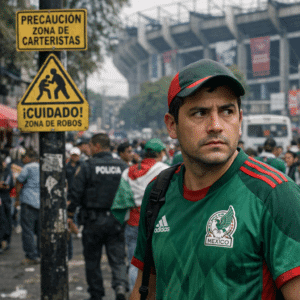
Every major international tournament produces a parallel economy of people specifically targeting foreign visitors who don’t know the local landscape, don’t know the local prices, and are distracted by the excitement of being somewhere new for a once-in-a-generation event.
This isn’t specific to Mexico, or to the USA, or to Canada. It happens at every World Cup in every host country. The methods vary. The underlying principle doesn’t: a large concentration of financially comfortable foreign visitors who are slightly disoriented is an opportunity for people running various kinds of fraud.
Knowing the playbook in advance makes you almost entirely immune to it.
Here are the ten most common scams targeting World Cup 2026 fans — and exactly what to do when each one appears.
Check the official tourist safety alerts and live transport fraud updates [Click Here to View Live Status].
Scam 1: The Fake Taxi
Where it happens: Outside airports and stadiums, predominantly in Mexico City.
scams World Cup 2026 how to avoid tourists
How it works: An unofficial driver — sometimes in a car that superficially resembles a taxi, sometimes not — approaches you outside the terminal or stadium exit offering a ride. The fare is either quoted high or metered using a tampered device. In the worst cases, the driver takes a different route and demands a larger payment at the end.
The defense: Use Uber or DiDi exclusively. Open the app before you exit the building, set your destination while you’re still inside, and walk to your driver’s location. If you must use a taxi, use only official licensed taxis — in Mexico City, these are pink and white. Never negotiate with someone who approaches you.
The rule is simple: the cars find you outside the building. You find the cars through the app.
Scam 2: ATM Skimming
Where it happens: Standalone ATMs near tourist areas and stadium entrances, predominantly in Mexico.
How it works: A fake card reader — a skimmer — is attached over the real card slot. It captures your card data when you insert. A small hidden camera or fake keypad captures your PIN. Your details are then used to clone your card.
The defense: Only use ATMs inside bank branches. Banamex, HSBC, and Santander are your safest options in Mexico. Before inserting your card, give the card slot a firm wiggle — skimmers are attached with adhesive and will move if tampered with. Cover the keypad with your hand when entering your PIN, every time, without exception.
scams World Cup 2026 how to avoid tourists
Better still: use a Wise card and minimize your cash withdrawals entirely.
Scam 3: Fake Match Tickets
Where it happens: Outside stadiums and on social media, all three host countries.
How it works: Scalpers sell counterfeit tickets or legitimate-looking tickets for seats that don’t exist or have already been sold. The ticket looks real. The QR code doesn’t scan at the gate.
The defense: Buy tickets exclusively through FIFA’s official platform. If someone offers you a ticket outside the stadium — regardless of how legitimate they look, regardless of the price — walk away. There is no safe version of this transaction.
scams World Cup 2026 how to avoid tourists
Scam 4: The Mustard Spill
Where it happens: Crowded metro stations and stadium areas, predominantly in Mexico City.
How it works: Someone “accidentally” spills something on you — mustard, ketchup, a drink. An accomplice immediately helps you clean it up, profusely apologetic. While you’re distracted, your phone, wallet, or bag is taken.
The defense: If someone spills something on you in a crowded area, step back immediately and put your hand on your belongings before engaging with anyone trying to help. The apology is the distraction. Your possessions are the target.
Scam 5: Fake Police Officers
Where it happens: Tourist areas in Mexico City.
How it works: Someone approaches you claiming to be a police officer — sometimes with a badge, sometimes in partial uniform — and asks to inspect your wallet or belongings for “counterfeit currency” or “drugs.” Real police in Mexico do not do this.
The defense: Real police officers will never ask to see your cash or search your belongings on the street without cause. If approached, say you’d like to go to the nearest police station. Anyone running this scam will back down immediately.
scams World Cup 2026 how to avoid tourists
Scam 6: The Overpriced Menu
Where it happens: Restaurants and bars near stadiums and tourist areas, all three countries.
How it works: You’re handed a menu without prices, or a menu with prices different from what appears on the bill. The overcharge is often small enough that it feels awkward to dispute.
The defense: Ask to see prices before ordering. “How much is this?” is a question you have every right to ask. Check the bill against what you ordered before paying. If the numbers don’t match, politely point it out — most genuine establishments will correct it immediately.
Scam 7: Fake WiFi Hotspots
scams World Cup 2026 how to avoid tourists
Where it happens: Airports, fan zones, and public areas, all three countries.
How it works: A hotspot is set up with a name similar to the official venue or airport WiFi. Connecting to it routes your traffic through the scammer’s device, allowing credentials and card details to be captured.
The defense: Don’t use public WiFi for anything sensitive — banking, email, anything requiring a password. Use your Airalo eSIM data instead. If you must use public WiFi, use a VPN.
scams World Cup 2026 how to avoid tourists
Scam 8: The Ticket Upgrade
scams World Cup 2026 how to avoid tourists
Where it happens: Outside stadium entrances, all three countries.
How it works: Someone approaches offering better seats than your ticket — “I have to leave early, I’ll sell you my premium seats.” The tickets are fake, duplicated, or for a different section than claimed.
The defense: Your original seat is fine. Anyone offering upgrades outside the stadium is running a scam. Walk past them.
scams World Cup 2026 how to avoid tourists
Scam 9: The Street Photographer
Where it happens: Tourist areas and fan zones, predominantly in Mexico.
scams World Cup 2026 how to avoid tourists
How it works: Someone offers to take your photo with your phone or camera. They take the photo, then walk away with your device. Or they hand it back and then demand payment.
The defense: Only accept offers to take your photo from people who are clearly stationary — shop owners, families nearby, other tourists who are obviously in the same situation as you. Never hand your phone to someone who approached you specifically to offer this.
scams World Cup 2026 how to avoid tourists
Scam 10: The Sob Story
Where it happens: All three countries.
How it works: An approach involving a compelling personal story — a sick relative, a lost wallet, a missed flight — leading to a request for money. The story is detailed and emotionally engaging.
The defense: Genuine emergencies involve the police, embassies, and official tourist assistance services — not strangers on the street. Sympathy is appropriate. Cash is not.
scams World Cup 2026 how to avoid tourists
The Single Rule That Covers All of Them
Every scam on this list shares one characteristic: it requires you to engage and respond without thinking.
The mustard spill works because you react to the shock before you assess the situation. The fake police work because authority creates compliance before skepticism. The sob story works because emotional engagement overrides critical thinking.
The defense, in every case, is the same: pause before you respond. Take two seconds. Ask yourself what’s actually being requested and what the realistic outcome of compliance is.
Two seconds of deliberate thought makes you almost entirely immune to every scam on this list.
The $9 World Cup 2026 Survival Kit includes printable anti-scam checklists for all three host countries — specific to each city, in a format you can actually check on match day.
scams World Cup 2026 how to avoid tourists
👉 [Download the Survival Kit — $9 PDF, instant access]
scams World Cup 2026 how to avoid tourists